
As microfluidics continues to reshape biomedical engineering, diagnostics, chemical synthesis, and organ-on-chip research, manufacturing methods must evolve accordingly.
In this evolving landscape, high-resolution additive manufacturing is emerging as a transformative production method. By combining micron-level precision with true 3D freedom, micro-scale 3D printing enables the fabrication of structures that even impossible to achieve through conventional manufacturing.
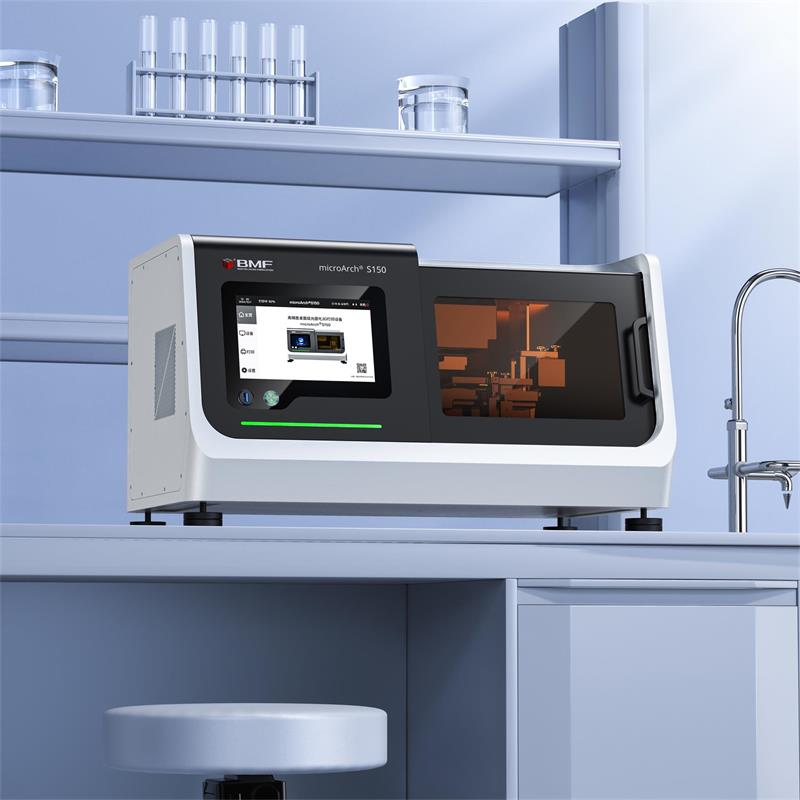
Using transparent resin with light transmittance exceeding 90%, the BMF microArch® S150 system (resolution: 25μm)demonstrates how micro-scale 3D printing can deliver transparent microfluidic chips featuring ultra-fine channels, complex internal geometries, and excellent optical performance simultaneously.
Why Transparent Resin Matters in Microfluidics?
Transparency is far more than a visual advantage in microfluidic systems. In many scientific and industrial applications, optical clarity is essential for device functionality.
However, achieving both high transparency and micron-scale precision has historically been challenging. Conventional fabrication approaches often struggle with balancing surface quality, dimensional accuracy, and optical transmission—especially when channel dimensions fall below 200 μm.
BMF’s Clear can print as small as 10 micron layer heights, enabling finer feature resolution and greater design flexibility. No polishing or sanding is required after printing. Clear is well-suited for optical imaging, light transmission, microfluidics, signal sensing, and visualization of internal structures, and has passed biocompatibility testing for skin irritation, sensitization, and invitro cytotoxicity.
The S150 system addresses this challenge through Projection Micro Stereolithography (PµSL) technology combined with specialized Clear resin materials, enabling printed devices with light transmittance above 90% and smooth internal channel surfaces.
High-Resolution Transparent Microfluidic Structures
- Four Distinct Microfluidic Channel Architectures
One of the most significant advantages of micro-scale 3D printing is the ability to fabricate multiple complex channel geometries directly within a monolithic transparent device.
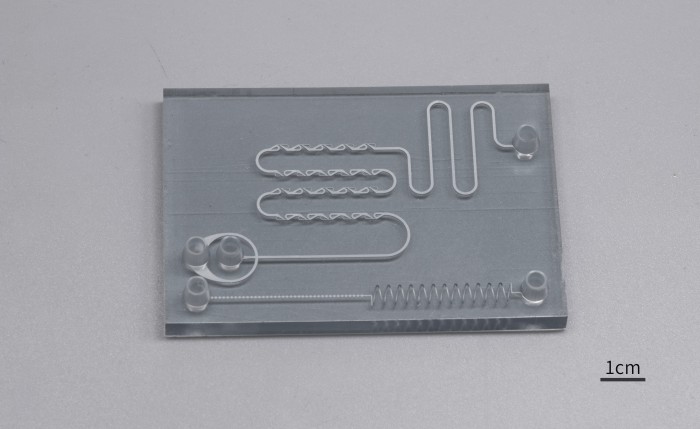
Using Clear resin on the S150 system, four representative microfluidic channel structures were successfully fabricated, each designed for different flow manipulation purposes.
The printed chip includes:
- Tesla valve channels with diameters of 120 μm
- Spiral channels with diameters of 200 μm
- Serpentine channels with herringbone structures at 120 μm
- Droplet-shaped microfluidic channels with diameters of 120 μm
The ability to fabricate these diverse microfluidic structures in a single transparent print demonstrates the design freedom enabled by the S150 platform.
- Blood Vessel Microfluidics
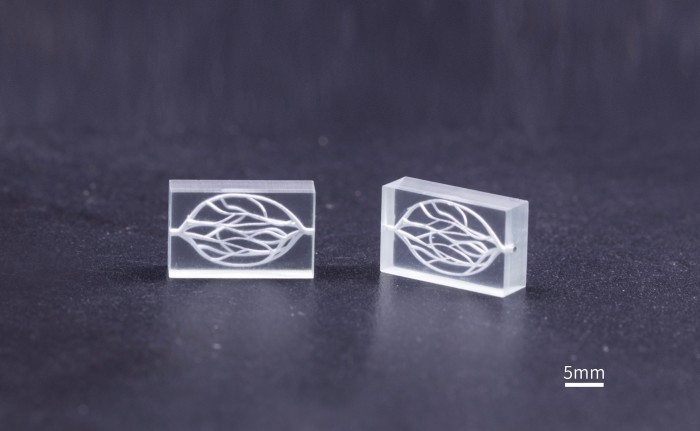
Beyond standard flow control structures, the S150 also enables the fabrication of biologically inspired vascular microfluidic systems.
Using Clear resin, a Blood Vessel Microfluidics structure featuring 120 μm vessel-like channels was successfully printed with high optical clarity and excellent dimensional consistency. The transparent material allows real-time visualization of flow conditions, making it highly suitable for organ-on-chip research, tissue engineering, and cell culture applications.
- Standard Transparent Microfluidics
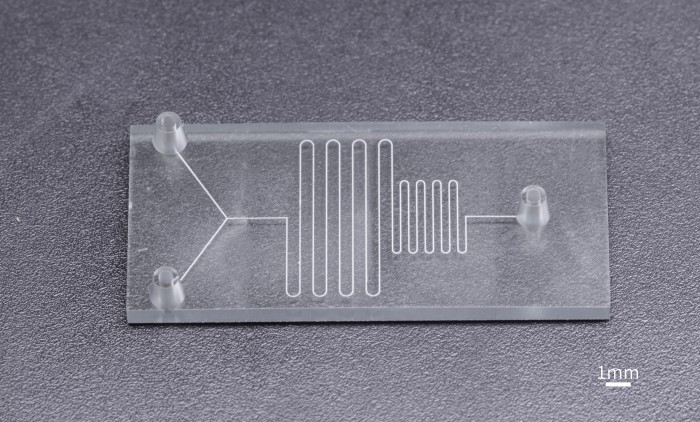
The S150 also successfully fabricated standard transparent microfluidic channels with diameters as small as 100 μm, showcasing its ability to achieve ultra-fine enclosed structures while maintaining optical transparency and structural integrity.
At this scale, even minor dimensional deviations can significantly affect fluid behavior. The successful production of transparent 100 μm channels highlights the system’s precision, process stability, and suitability for advanced analytical and biomedical microfluidic applications.
Why the S150 Stands Out for Transparent Microfluidics
Transparent microfluidic fabrication requires more than just high resolution. Manufacturers must simultaneously balance optical clarity, channel precision, surface quality, and production efficiency—especially for enclosed and highly complex geometries.
By enabling transparent printing of intricate microfluidic structures down to 100 μm scales, the S150 provides researchers and engineers with a more flexible and efficient manufacturing solution for next-generation microfluidic innovation.
From advanced flow-control geometries to vascular-inspired biomedical devices, transparent micro-scale 3D printing is opening new possibilities for the future of microfluidics.